01  —  The Recognition

An entire region, already in motion.

The vitality movement is already underway, in every neighbourhood, across every age. Our job is to organise it for seven hundred million people.

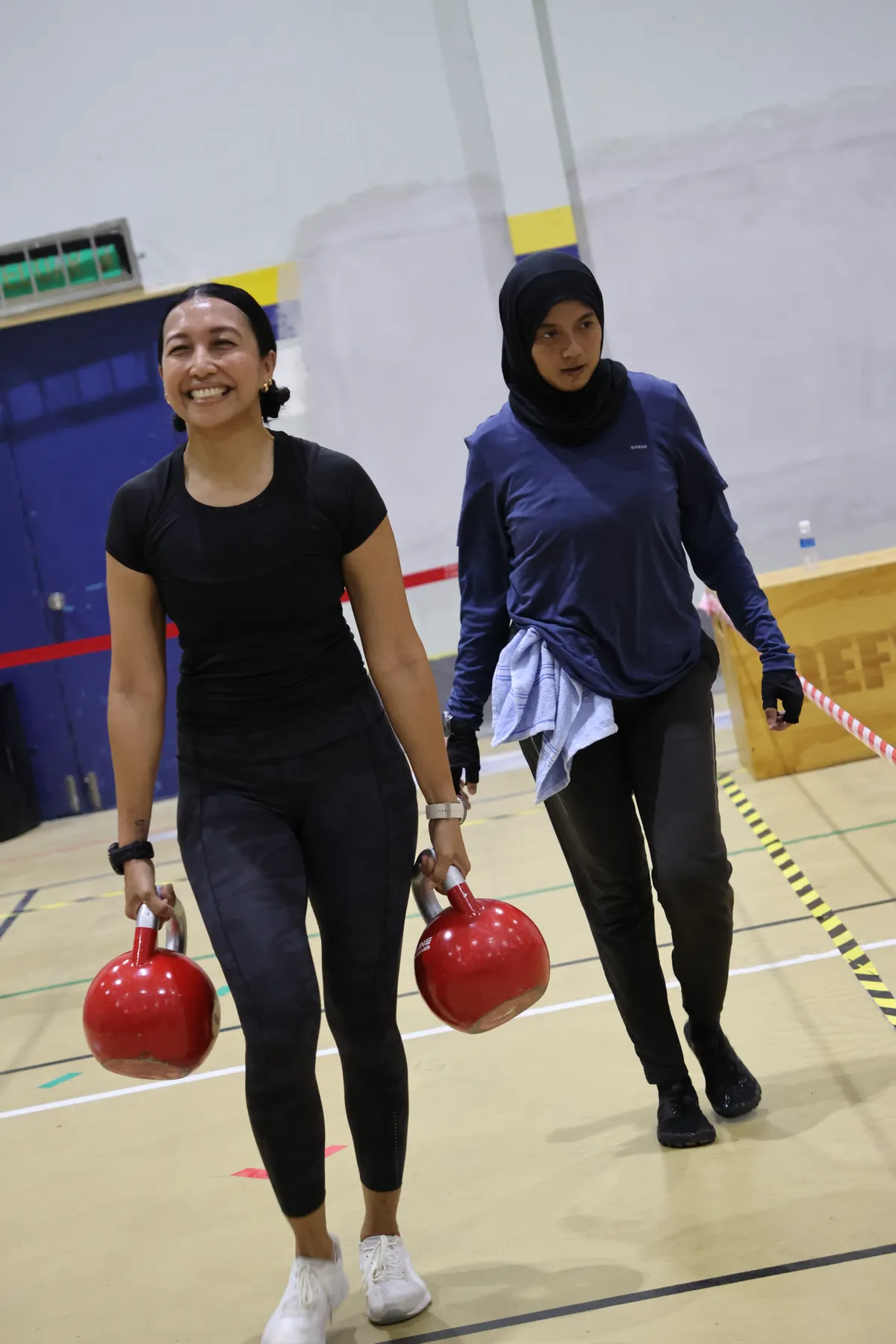
You know more than one person like this. The colleague who runs marathons in his fifties. The friend who started Hyrox last year and now travels to every event in the region. The mother in her sixties who teaches Pilates and looks twenty years younger than her age. The uncle who plays golf four times a week and has more energy at seventy than men half his age. The neighbour who took up lifting in her forties and never looked back. Across every age, every income, every neighbourhood in this region, there are quiet, ordinary people doing the work that keeps them moving, earning, and entirely themselves.

Now imagine that for seven hundred million people across Southeast Asia. That is the work in front of us, and it is the reason Defy exists.

02 — The Market

The space is growing. Everywhere.

The global wellness economy reached USD 6.8 trillion in 2024 and is forecast to grow at almost twice the rate of global GDP. In Southeast Asia the demand curve is steeper, the supply is fragmented, and the institution is missing.

Across the world, the economy that surrounds people like these has become the fastest-growing category of consumer spend in any major market. According to the Global Wellness Institute's 2025 Economy Monitor, the global wellness economy reached USD 6.8 trillion in 2024, larger than tourism, larger than information technology, larger than the green economy, and almost four times the size of the global pharmaceutical industry.

It is forecast to expand to USD 9.8 trillion by 2029, growing at 7.6% per year, which is roughly twice the projected rate of global GDP. The appetite is not cyclical. As populations age and incomes rise, the question that occupies more of every household budget is no longer what to consume but how to remain capable of consuming it.

For a sense of what this category produces in adjacent regions, India's Cult.fit raised USD 720 million across a decade and was valued at USD 1.45 billion when Temasek invested in March 2026.

In Southeast Asia the curve is steeper still. The population is younger, the rate of digital adoption faster, and the rise of the middle class more aggressive than anywhere else on the planet.

The same region also carries one of the worst metabolic disease curves in modern history. The International Diabetes Federation projects that the number of people in Southeast Asia living with diabetes will grow by seventy-three per cent by 2050, reaching 185 million, and recent work published in The Lancet Diabetes and Endocrinology has confirmed that Asian populations develop metabolic disease earlier and at lower body weights than Western reference populations, meaning the burden begins long before the conventional warning signs appear.

The demand for vitality is here, and it is intensifying every year. The supply is fragmented across thousands of independent gyms, studios, coaches, and apps that do not speak to one another. The institution that organises it does not yet exist.

The Campus, Ampang · 04 — 2026
03 — The Reframe

Not lifestyle. Infrastructure.

Treated as wellness, vitality produces the industry we have today. Treated as national infrastructure, it becomes the platform on which the next twenty years of Southeast Asia will be built.

What is often dismissed as lifestyle, the reps and sessions and protocols and the discipline of looking after one's body, is in fact the quiet substrate of every economic indicator a country actually cares about. Productivity, labour participation, healthcare cost, the age at which people leave the workforce: each of these sits downstream of one variable, which is human capability. And human capability is what vitality multiplies.

Treated as a wellness category, this work produces the industry we have today: fragmented, elite-priced, low-impact, and largely irrelevant to the people who need it most. Treated as national infrastructure, it becomes the platform on which the next twenty years of Southeast Asia will be built. The road, the grid, the port; and now, the platform for the people who use them.

04 — The Stakes

The cost of doing nothing. The impact of doing this.

The cost of doing nothing is a slow generational loss, compounded by an AI displacement that is already underway. The impact of doing this work is a region that ages stronger and a productive class with the one career machines cannot claim.

The cost of doing nothing is not abstract. A region of seven hundred million people is currently on a trajectory to become older, sicker, less productive, and more expensive to maintain than any prior generation in its history. Healthcare budgets that already strain under chronic disease will buckle further. Productivity, which has been the engine of regional growth for forty years, will flatten as a workforce that ought to be capable spends more of its life recovering than producing. Talent will leave the labour market a decade before it should, taking with it the institutional memory and earning power that compound a country forward.

At the same time, a different kind of displacement is now underway, and it is accelerating. McKinsey's most recent modelling estimates that close to thirty per cent of current work hours in advanced economies will be automated by the end of this decade, and the World Economic Forum's 2025 Future of Jobs Report projects ninety-two million roles displaced globally by 2030, the largest reshaping of knowledge work in living memory.

Southeast Asia will not be spared. Tens of millions of educated, ambitious, productive people across the region will find that the careers they trained for are being absorbed into software, and they will need something to do with their time, their savings, and their identities.

The work that remains, the work that machines cannot do, is the work that requires physical presence, emotional intelligence, behaviour change, and trusted human relationship repeated over years. That work is coaching, in every form the word takes.

The impact of doing this work at the scale we plan to do it is the reverse of the slow loss above. A hundred thousand coaches earning three to five times what they earn today, drawn in part from exactly the displaced productive class now searching for the next thing to give their lives shape, employed across a region that has never before had this profession in any organised form.

Tens of millions of members training, eating, and ageing differently. Healthcare spend bending downward as prevention takes back ground from treatment. Productivity bending upward as the workforce stays in the workforce longer.

A new middle-class profession that did not exist before, anchored in the one category of work that AI is least likely to claim. And a region that ages stronger instead of sicker, more capable instead of more dependent, a contributor in the global economy rather than a casualty of it.

One side of this is a slow loss that no one will notice until it is too late to reverse. The other is a generational gain that will define the next era of Southeast Asian growth. We have picked the side we are building.

05 — The Proof

What we did to know we're right.

We built the prototype with one million ringgit of personal capital before we asked anyone for anything. Twelve months later, the demand is pulling us forward faster than we can build, and the numbers tell us there is a regional sector to organise.

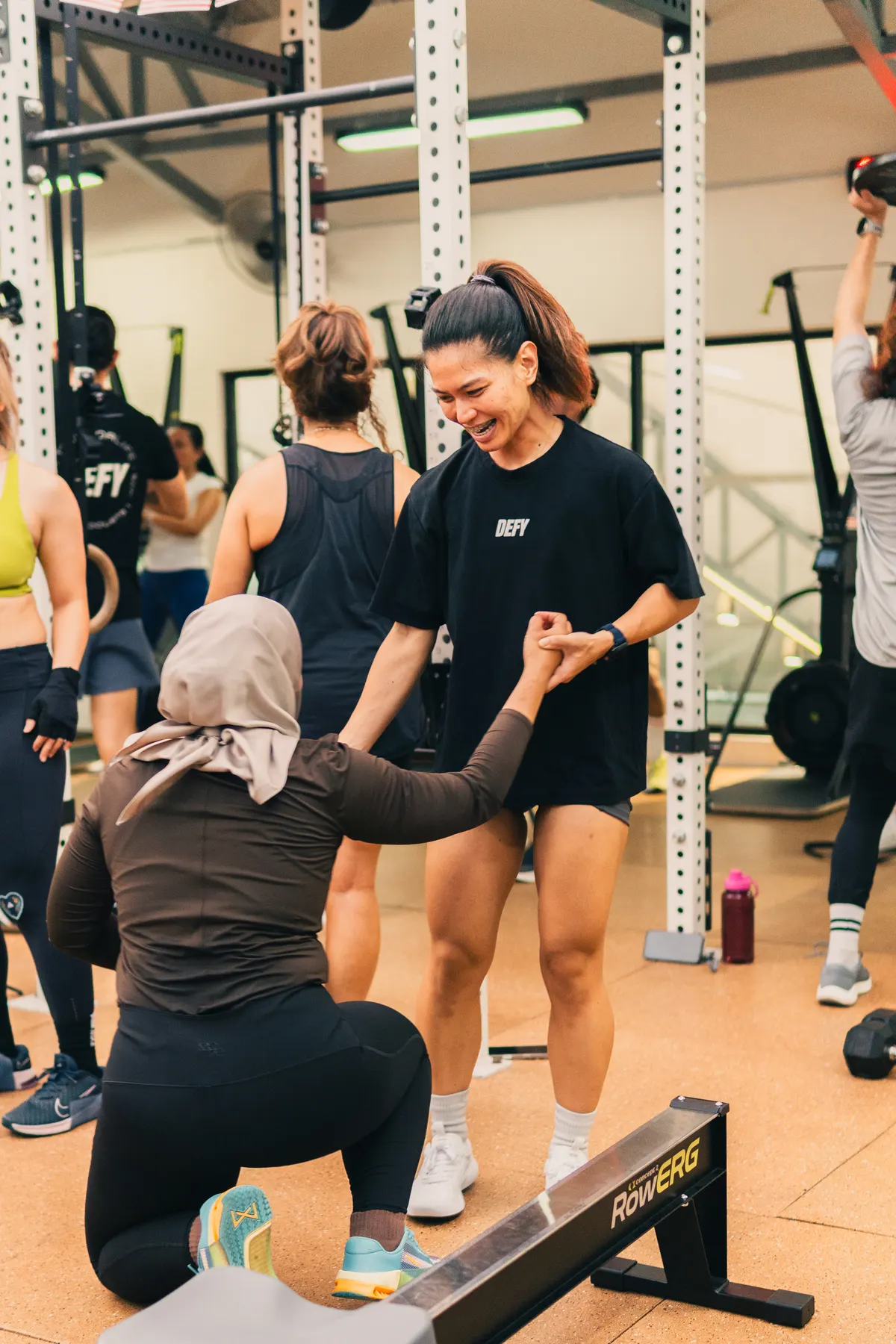
Before any of this was a fundraise, we wanted to know whether the thesis would hold up under conditions that resembled the real world rather than a model. So we put one million ringgit of our own capital into a single Space at the Campus in Ampang, recruited six coaches, opened the doors, and ran the experiment for twelve months without a marketing budget, without a brand to lean on, and without any of the usual venture safety nets.

The audited numbers, twelve months later, were these. One thousand seven hundred coaching sessions a month, at fill rates above sixty per cent. Zero coach churn across the entire year. Slightly over a million ringgit in revenue. Coaches taking home between eight and fourteen thousand ringgit a month, in a country where the median household income is around six. Corporate clients in the door inside the first six months, including UOB, Standard Chartered, and Sime Darby. A waitlist that is still growing today, attended to entirely by word of mouth.

We did not pitch this. We built it. And when we looked up at the end of the year, what we had on our hands was no longer an experiment. It was the smallest viable version of a sector that does not yet exist anywhere else in the region, and the first proof that, when the model is constructed properly, the demand was always there.

What has happened since the audit closed is the more telling story. The Campus in Ampang has invited us to move into a substantially larger footprint within the same complex, a unit that will roughly double our capacity and our revenue at the existing economics. Our coaching pipeline, built entirely through word of mouth and the network around the original six, now exceeds the slots we currently have. Our classes run on permanent waitlists, day after day, with members frequently unable to book the sessions they want. And other gyms across the country, until now competitors in everything but name, have begun approaching us about hosting Defy coaches inside their own facilities, because they can see what their members are asking for and what their own teams cannot deliver. None of this was sold. All of it arrived. The demand is pulling us forward faster than we can build for it, which is not a problem we expected to have at this stage, and it is the clearest signal we have that the next phase is underway whether we are ready or not.

Year One · The Campus, Ampang
06 — The Build

How the platform is built.

The platform has five jobs: create coaches, amplify them, enable them, generate demand for them, and elevate their earnings. The architecture is designed to compound two journeys, the member's and the coach's, across decades.

Defy is not one company building one product. It is a holding architecture designed to launch and own a coordinated portfolio of operating companies, each one serving the same coach economy from a different angle. The platform has five distinct jobs, and every engine we build, today or in the future, exists to do one of them: creating world-class coaches at scale, through Defy Academy and Defy Education; amplifying them into recognised, trusted, aspirational figures, through Defy Talent, Defy Studios, and Defy Media; enabling them with the physical and digital infrastructure on which they run their careers, through Defy Spaces and CoachOS; generating demand across employers, organisers, and institutions, through Defy Corporate, Defy Events, and Defy Retreats; and elevating their earnings into income that compounds across decades, through Defy Finance and Defy Ventures.

What all of this looks like, lived rather than listed, is two journeys the architecture is designed to compound. The first is the member's.

A founder in his thirties walks into a Defy class because a coach posted something about recovery, and eighteen months later he is on functional bloodwork, a peptide protocol, a corporate vitality contract he signed for his entire executive team, and his wife and children are members too.

A chairman in his fifties enters through an executive physical and leaves with a private coach, a sleep clinic, a Bali retreat with eleven men in his cohort, and a cheque written into the Defy round.

A widow in her sixties enrols on an insurer-subsidised pathway, raises her bone density, avoids the hospital admission that was almost certain, and brings four friends with her.

A founder, a chairman, and a widow each generate more revenue, across more products, for longer, than any gym could ever charge for. The gym was always only one of sixteen things.

The second journey is the coach's, and it is where the moat actually lives.

A football academy reject from Kajang who joined the Defy Academy at twenty-five becomes a national talent inside two years, with his face on a docu-series, his signature programme on the digital platform, and his earnings five times what he would have made anywhere else.

A burned-out chain-gym coach who was about to leave the profession joins Defy and triples her hourly rate inside a month, anchors the women's vertical, and ends her first year as the most-booked midlife women's coach in the country.

A forty-year-old project manager retrenched on a Thursday morning chooses the Defy Coach Rebuild track over driving Grab, walks into his old employer six months later as a Defy Corporate coach, and writes a different kind of next chapter than the one that closed his last career.

None of these arcs is hypothetical. Every one of them is being walked by a real person inside the system today, in early form, and the architecture is what makes them inevitable at scale.

Each engine has its own profit and loss, its own leadership, and its own cap table. Each one spins out as a separate operating company when it is ready. And Defy retains a meaningful stake in every one, which is how the holding architecture compounds across the entire vitality economy.
07 — The Team

Who's building it.

Six people, one thesis. The team that is building Defy combines public mandate, cultural reach, founder operating record, policy depth, listed-company discipline, and decades of coaching craft.

Khairy Jamaluddin
Chairman

Khairy Jamaluddin

Khairy chairs the company. He served as Malaysia's Minister of Health during the country's pandemic response, where he chaired the national immunisation programme and delivered one of the fastest vaccination rollouts in the world. Earlier, he was Minister of Youth and Sports, the portfolio under which most of the country's frontline fitness, athletic development, and community sport infrastructure sits. Educated at Oxford and a long-standing Young Global Leader at the World Economic Forum, he has spent two decades operating at the intersection of public policy, institutional reform, and design-conscious country-building. The two ministries he held are the two that touch every dimension of the work Defy is doing.

Datuk Remy Ishak
Cultural Founder

Datuk Remy Ishak

Remy is one of the most recognisable actors in the country and one of the most followed cultural figures in the Malay-speaking world, with a public presence that spans television, film, and social media. He is also a competitive athlete in his own right, training daily, lifting, racing, and modelling the kind of vitality at fifty that the company is in business to make ordinary. He carries cultural authority that no founder team can manufacture and no marketing budget can buy, and his presence at the centre of the work means that what Defy does is not merely visible to the country, but recognisable inside it.

Saify Akhtar
Founder & CEO

Saify Akhtar

Saify spent fifteen years building systems that change human behaviour at national scale, including being integral to the launch of both Uber and Grab in Malaysia, where he designed driver-side strategies and features still in use today by hundreds of thousands of Southeast Asian earners. He served as one of the youngest Group CEOs of a Main Market public-listed company in Malaysia, built national digital infrastructure including eJamin, and has operated across Singapore, Malaysia, Vietnam, the United Kingdom, and the United States. He has put one million ringgit of personal capital into Year One of Defy, and his own transformation from obesity and chronic fatigue to marathon running and competitive strength sports in his forties is the reason the work is built on the assumption that change is possible at any age and any starting point.

Chief Strategist

Dimishtra Sittampalam

Dimishtra was Special Advisor to Khairy across three ministerial portfolios, where he ran policy, corporate strategy, and deal origination for the offices that shaped large parts of the country's vitality, sport, and health agenda. His work has lived at the seam where government policy meets institutional execution, which is exactly the seam where Defy must operate to do anything at scale. He joined the company because he has watched, from the inside, how rarely the public and private sectors manage to build a sector together, and how often the absence of one disciplined private-sector institution is the reason regional ambitions stall.

Chief Operating Officer

Amanda Sabri

Amanda's operating record begins, like Saify's, on the launch of the gig economy in Malaysia: she co-founded the transport partner that launched Uber X in the country in 2013, before doing the same with GrabCar shortly after. She went on to run Dapat Vista, the fintech that built and operates payment systems for the Malaysian government, including eJamin, the region's first digital court bail payment system. She has built and sold companies, and taken a fintech from prototype to national infrastructure. Defy is the institution she joined to do all of that again.

Diamond Ogbeide
Executive Coach

Diamond Ogbeide

Diamond has spent more than twenty years inside the profession the company exists to elevate. A national-level sprinter for Nigeria and then Malaysia, a competitive footballer through school and club level, a two-time Asia Fitness Convention Fittest Man, an IAAF Level 1 athletics coach, and a master trainer across most of the disciplines that define modern coaching, from strength and conditioning to Hyrox, TRX, boxing, and obstacle racing. He is the person who teaches the coaches at Defy what world-class coaching actually looks like, and the standard against which every coach the system produces is measured. The investor question of whether the supply side can be world-class has a single, embodied answer; he is the answer.

08 — The Investment

Two ways in.

Two routes into this round, designed for two different kinds of investor: equity in the platform that will build the entire vitality economy across the region, or a capital partnership in the flagship Space that has already proved the model.

Option 01
Equity at the platform.
Round size · 2026RM 10M
Tickets opening nowRM 500k
InstrumentSAFE note
HorizonLong

The founding cap table for Defy itself. Exposure to every engine, every market, every spin-out. Most investors take more than one ticket. Capital here funds the platform layer, the operating system every engine eventually runs on, the leadership team that builds and incubates each operating company, and the brand and cultural infrastructure that compounds across all of them. Founding investors stay close to the build through every round and every spin-out that follows.

Option 02
Capital partnership at the flagship Space.
Option A
36 months, 1.3×
MonthlyRM 36,111
Total returnRM 1.30M
Equity10% perpetual
Indicative div.~RM 86k p.a.
Option B
60 months, 1.5×
MonthlyRM 25,000
Total returnRM 1.50M
Equity15% perpetual
Indicative div.~RM 129k p.a.

Total build-out is one million ringgit, capitalised through a hire purchase structure with a six-month grace period from first drawdown. Capital Partners hold title to the build-out assets, take monthly instalments from operating cashflow, and retain a perpetual equity interest in the operating company. The flagship is currently expanding into the only Hyrox Partner Gym in the vicinity, ahead of the regional race calendar in Kuala Lumpur, Singapore, Bangkok, and Jakarta.

There are two ways into this round, and they exist because the company has two distinct things to fund and two distinct kinds of investor whom each appeals to. Same company, different instruments, different risk profiles, different roles inside the architecture. Most investors pick one. A few do both.

The first is equity at the platform, on a SAFE note. We are raising ten million ringgit at the holding-company level in tickets of five hundred thousand ringgit each, and most investors who come in take more than one ticket. This is the founding cap table for Defy itself. The capital funds the platform layer, the central operating system every engine eventually runs on, the leadership team that builds and incubates each operating company, the brand and cultural infrastructure that compounds across all of them, and the venture-builder discipline that decides which engines spin out and when. Founding investors enter at the lowest valuation Defy will ever carry, and they stay close to the build through every round, every spin-out, and every market expansion that follows.

The second is a capital partnership at the flagship Space, the Campus in Ampang. Total build-out capital is one million ringgit, capitalised under a hire purchase arrangement, with a six-month grace period from first drawdown and two structures available for the Capital Partners' consideration. Option A is a thirty-six-month term at a 1.3 times multiple, with monthly instalments of RM 36,111 and a ten per cent perpetual equity interest in the operating company. Option B is a sixty-month term at a 1.5 times multiple, with monthly instalments of RM 25,000 and a fifteen per cent perpetual equity interest. Both options carry the perpetual equity alongside the hire purchase return. Title to all assets vests in the Capital Partners' name. Monthly instalments are paid in priority to any dividend or distribution at the operating-company level. The flagship is currently expanding into the only Hyrox Partner Gym in the vicinity, ahead of the regional race calendar across Kuala Lumpur, Singapore, Bangkok, and Jakarta.

Same company. Different instruments. The platform raise is for investors who want to own a stake in the entire sector being built. The flagship partnership is for investors who want a structured income from a proven unit while staying close to the people who are building the platform around it. Most pick one. A few find that the right answer for them is both.

09 — Modelled Outcomes

What the build looks like, modelled three ways.

We have modelled the equity round across an eighteen-month build period in three cases. The base case, which is the case we are operating to, puts the platform at five hundred coaches across forty-two Spaces, with roughly twenty-eight million ringgit of annual revenue.

DownsideBase caseAggressive
Coaches on platform250500650
Annual revenueRM 14MRM 28MRM 37M
Revenue multiple10×18×
Implied valuationRM 70MRM 280MRM 670M

Inputs are conservative on what we control, and reflect multiples markets have already paid for comparable companies in adjacent regions. SAFE conversion terms determine investor MOIC at the next priced round.

Numbers in this category are inherently directional, but the structure of the model is conservative on the inputs we control and aggressive only on the multiples public and private markets have already paid for comparable companies in adjacent regions. The downside case assumes we deliver roughly half the coach pipeline we currently have line of sight to. The base case assumes we operate to plan. The aggressive case assumes the demand pull described in Section 05 continues to outpace our capacity to build, which is the trajectory we are on today.

For context on where these multiples sit, the Cult.fit benchmark cited in Section 02 reached a USD 1.45 billion valuation in the same category, in a market with adjacent demographics and a less developed coach economy than the one we are building toward.

10 — The Conversation

How to start the conversation.

We are taking coffee meetings with the people who understand where vitality is going in the next decade and want to help build the most exciting company in Southeast Asia over the same window.

Let's spend an hour together, discussing vitality, and deciding together whether the next ten years of this region is something we want to build side by side.

If we could do this after a workout at Defy, even better.

The first cup is on us. The fastest way to set it up is a WhatsApp, to Saify or to Dimishtra, whichever feels closer to where you are coming from.

11 — Coda

The next decade of human vitality in Southeast Asia.

Defy is the company being built to power it. The founding round is open to the few who already see it.